Pragmatic
Learning-oriented
Adaptive
Contextual
Embodied
The power of PLACE lies in how we work, not just what we do.
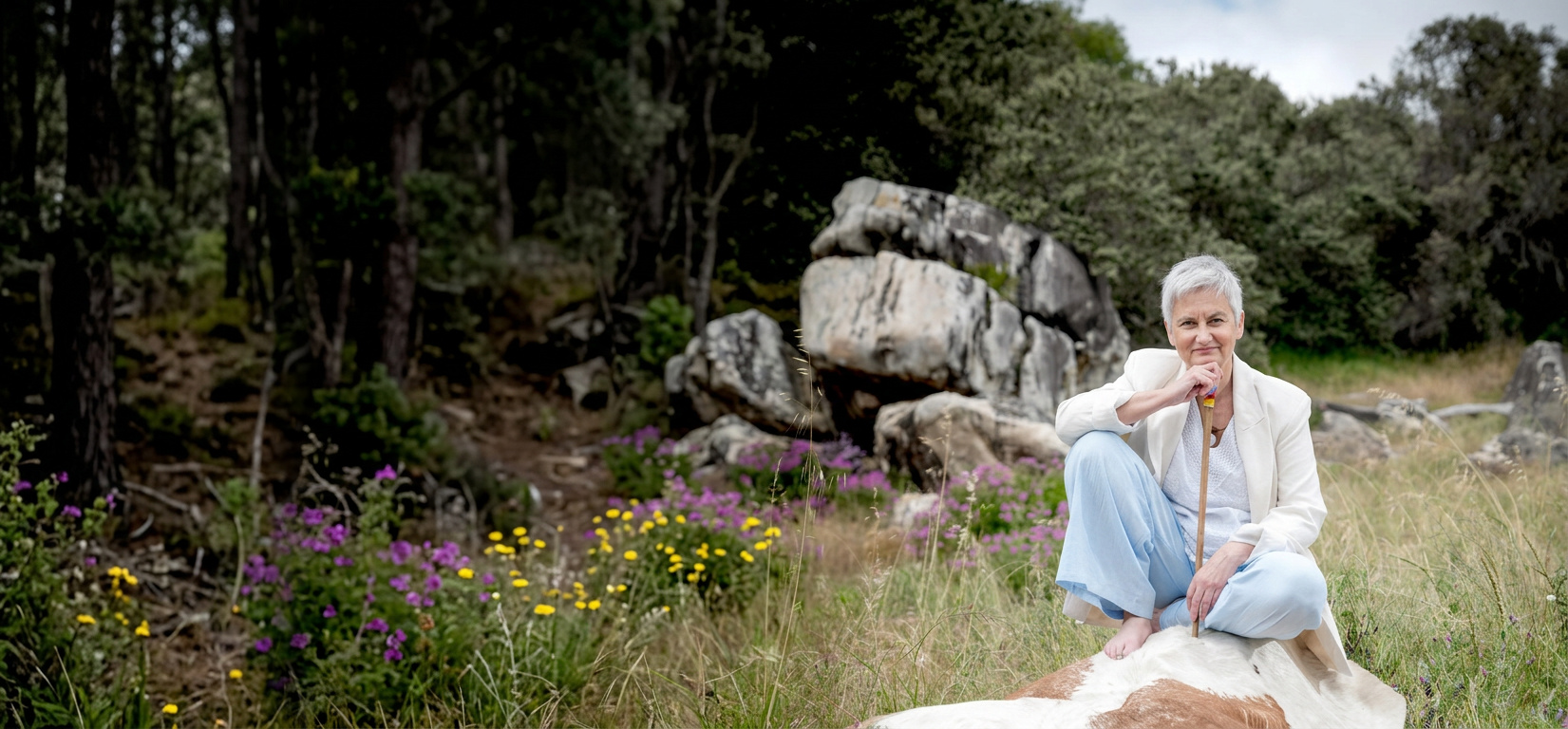
Nicola Robins
Nicola is a sustainability practitioner, consultant, speaker and author focused on sustainable transitions in an era of uncertainty and AI.
She has spent three decades working with organisations in emerging markets, primarily in Africa.
Trained at the University of Cape Town and Yale, she graduated as a practitioner within Southern Africa’s Ngoma tradition in 2002, and continues to practice within the Vondo lineage.
Nicola co-founded the Cape Town-based consultancy Incite in 2005 and now works as an independent consultant while remaining part of the Incite network. For the past seven years, she's explored how complexity-aware methods can increase the effectiveness of organisational practice.
Nicola teaches at the Cambridge Institute for Sustainability Leadership and the UCT Graduate School of Business.
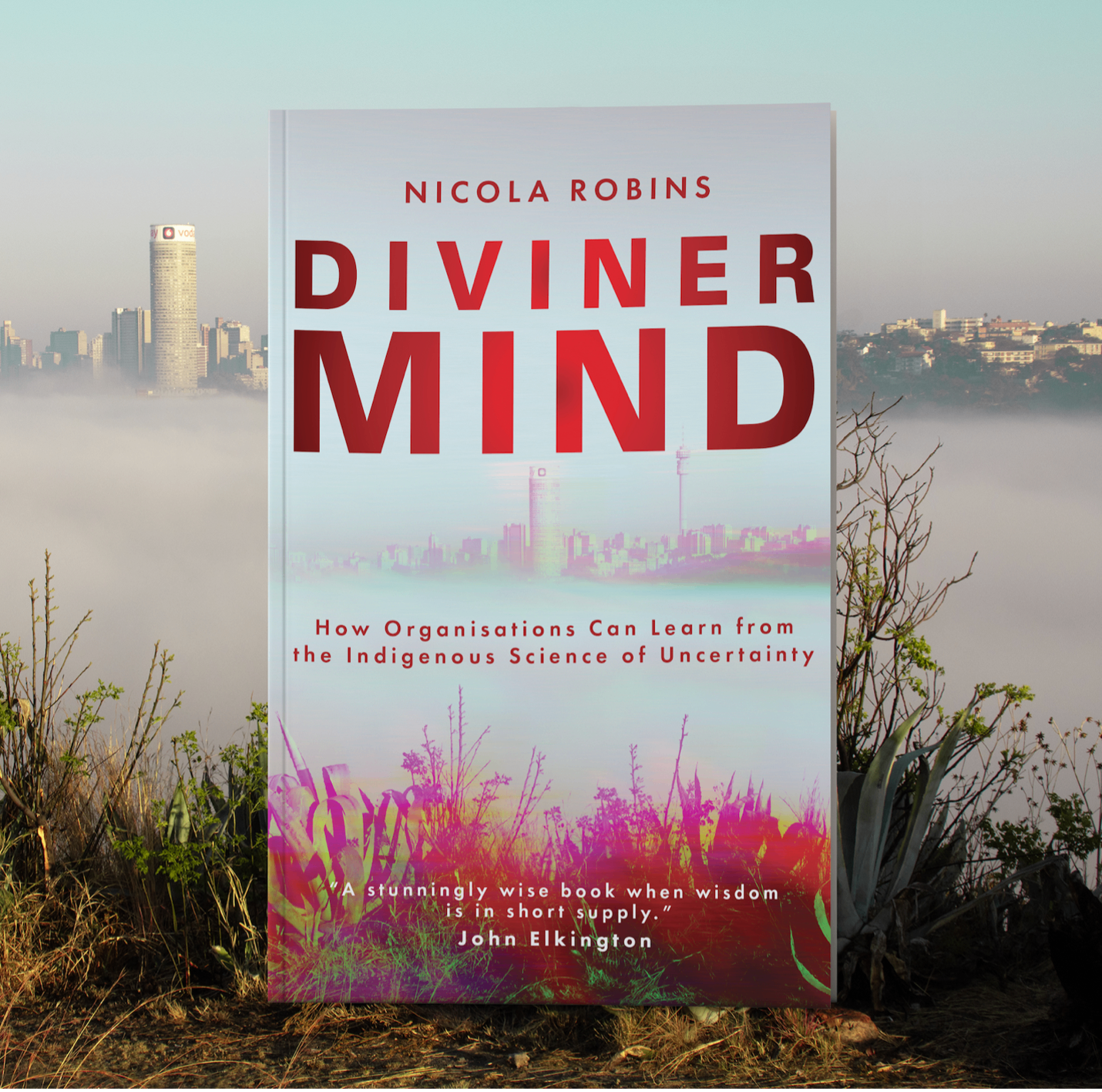
She is the author of Diviner Mind: How Organisations Can Learn from the Indigenous Science of Uncertainty.
A radically human approach to sustainability transition in an era of uncertainty and AI.
Sustainability has become more sophisticated. But the world we are trying to change has become less predictable.
Despite genuine progress, we're falling short of meeting human needs and protecting planetary systems. Organisational efforts encounter rebound effects and blowback. Committed practitioners are burning out.
AI offers extraordinary possibilities. But accelerating the way we work won't necessarily change what it delivers. That takes a radically human approach.
PLACE-based practice helps leaders and teams navigate sustainability transitions in conditions of uncertainty. It combines a clearer understanding of how change unfolds with practical tools for working with complexity, while strengthening our natural capacity to navigate the unfamiliar.
PLACE is simple but requires a small step beyond the familiar.

Guides for PLACE-based practice
PLACE is an acronym for five heuristics that guide how I practice it. They're offered to be tested, challenged and evolved!
Work with what needs to be done - strategy, risk, innovation, disclosure or governance.
Build capability through doing the work, not alongside it.
Respond as conditions change, informed by what we learn.
Work with what matters for this organisation, in this place, at this moment.
Bring people's lived experience into the work, alongside data and analysis.
The power of PLACE lies in how we work, not just what we do.
Experience across sectors
Decades of consulting experience across mining, retail, financial services and beyond have shaped how I practice PLACE.
Moving between these requires some clarity about how they overlap. For this reason, co-navigation engagements are typically with experienced or senior practitioners.
“Nicola worked with me through conversation, curiosity and humour. She taught me to sense organisational readiness and leverage what already exists.”
“Partnering with Nicola is an authentic, intuitive journey… PLACE-based methods centre our own intelligence and feel more grounded than traditional consulting."”
“I could not have asked for a better Mkhombandlela." [WayMaker]”
Over time, this builds a capability that belongs to the organisation not the consultant.
PLACE starts with respect for the people who make transitions happen. Every PLACE-based process is co-designed around the resources available: time, place, culture and budget.
When to use it: When trade-offs are inevitable and it helps to anticipate where they might arise.
What it does: Keeps strategy moving while creating room to learn, adapt and build ownership among those who deliver it.
Examples: Spur Corp’s Greater Good Framework was shaped around four impact areas with potential to scale. Teams also surfaced areas of fragility, including where driving social impact could put pressure on the existing system. Commitments and measures created space for learning without losing direction.
Informed by: Anthro-Complexity (Vector Theory of Change); Sustainability (planetary boundaries, social inclusion)
When to use it: When innovation needs to build on what works, rather than simply disrupt an already unstable system.
What it does: Surfaces patterns of innovation in the wider system to help teams see new possibilities.
Examples: Distell combined a contextual deep dive with innovation patterns to launch a new brand. Impala Platinum used the same approach to assess its circular economy practices and establish a baseline for moving forward.
Informed by: Ngoma (pattern detection); Anthro-Complexity (Exaptive practice)
When to use it: When the ground is shifting and teams need to make every move count.
What it does: Helps teams recognise what is changing, identify possibilities for action and decide where to focus their efforts.
Examples: At Pepkor, teams began to see how climate risk was already present in everyday decisions and actions. This made it easier to identify where they could act.
Informed by: Anthro-Complexity (Affordance Mapping)
When to use it: When who owns and uses a risk valuation model matters as much as how the risk is disclosed.
What it does: Values systemic risk as simply as possible, combining historical precedent with the knowledge of teams who manage the risk in practice.
Examples: Pepkor Logistics and Supply Chain teams analysed how a climate risk scenario might affect the profit formula. Their insights advanced climate disclosure while deepening the team's understanding of the business implications.
Informed by: Applied Anthropology (Rapid Participatory Appraisal); Conventional Financial Valuation Methods
When to use it: When progress depends on making difficult dynamics visible and exploring what might change.
What it does: Creates a flexible, safe-to-fail setting in which teams can explore complex situations and test possible ways forward.
Examples: Useful when complexity, power dynamics or competing priorities leave things stuck. A local NGO discovered it was living a reality of “double vision”: trying to align with its funders’ vision had obscured its own. Once the team could see and experience this tension for itself, a way forward emerged.
Informed by: Systemic Constellation Work; Ngoma (ancestral rituals); Anthro-Complexity (Vector Theory of Change)
When to use it: When what you’re seeking is not yet fully formed and analysis alone is not enough.
What it does: Opens up fresh perspectives by drawing on a team’s natural capacity to notice, make connections and make sense of what is emerging.
Examples: The process helped Weaving Wisdom conceptualise and name a two-year training programme to help leaders deliver in uncertainty.
Informed by: Ngoma (traditional divination); Anthro-Complexity (Affordance Mapping)
“Getting alignment on climate risk can be challenging. Engagements helped our buying and sourcing teams recognise climate resilience they already possessed…”
“Our teams felt recognised and respected for their natural ability to handle complexity.”
“Working with Nicola never felt like working with a consultant. It felt organic, strategically useful and genuinely embedded in context.”
A free monthly PLACE Praxis Lab for experienced practitioners, meeting online on the last Friday of every month, 12:00–13:30 SAST.
Inspired by the Oxford Praxis Lab, it's a space to share, develop and evolve PLACE together. We'll explore participative methods, including the theory that has informed my approach and the thinking you bring. We'll also look at the realities of doing this work, from complexity and how to explain what we do, to the potential for burnout.
Bringing the work to life for boards, teams and practitioners.
Keynotes, fireside chats, board trainings, masterclasses and retreats explore what it means to navigate sustainability transition when prediction and control are no longer enough. We'll develop a specific topic to meet your needs, or adapt a general theme to fit your context:
Conversations adapt to the organisation, audience and moment.
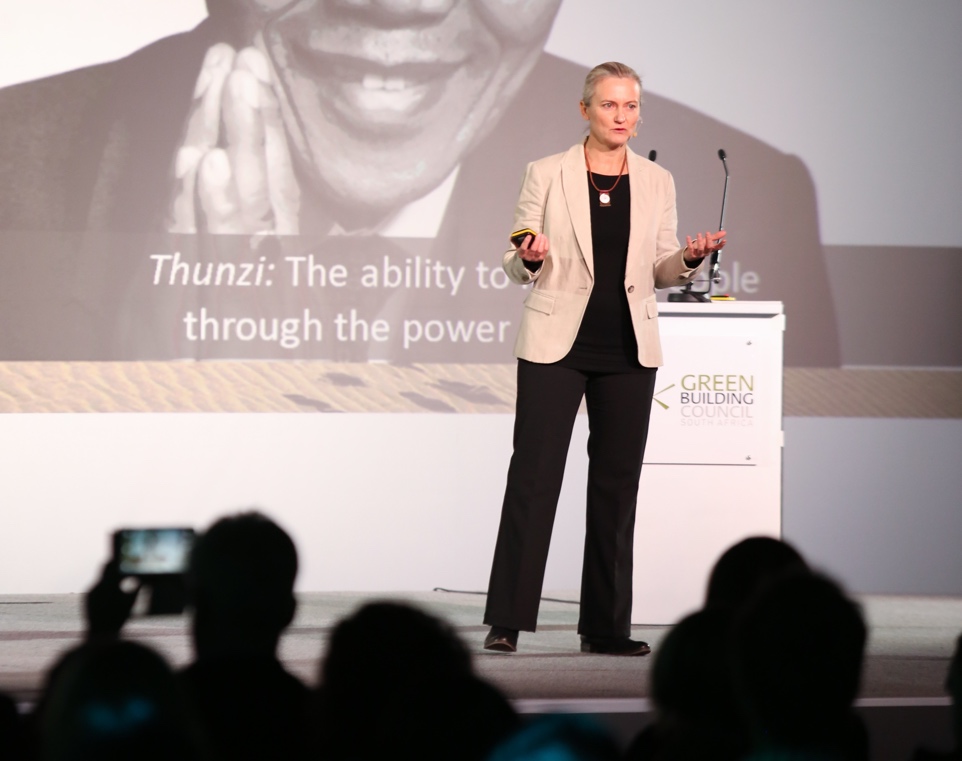
“Circular Economy board training increased focus and alignment. Without jargon, Nicola helped turn concepts and analysis into pragmatic next steps.”
“Nicola's sessions are top rated by our delegates — sustainability leads from across the African continent.”
“Nicola's embodied approaches did not merely explore Indigenous approaches in theory but put them into practice.”
My approach to PLACE-based practice has been shaped by 30 years of sustainability practice, professional training in Sustainability and Complexity Science, and long-term mentorship within Southern African Ngoma traditions. All have influenced how I work with uncertainty, intelligence and change.
Diviner Mind: How Organisations Can Learn from the Indigenous Science of Uncertainty (available in SA bookstores) is the wild backstory of how three different knowledge traditions unexpectedly came together.
Sustainability science provides direction, boundaries, and evidence for sustainable transitions.
Anthro-complexity (The Cynefin Co) explains how change happens and provides methods for navigating complexity.
Southern African Ngoma practice attunes us to place, history, and our humanity.
I write about PLACE-based practice, sustainability transition, complexity, learning from Ngoma traditions, and relational intelligence.
I contribute to podcasts and online events exploring how PLACE-based practice can help us navigate sustainability transition, complexity and uncertainty.

If you're a practitioner or leader whose work is evolving with the world, let's chat.
No agenda required.
Bring a challenge, a question or simply your curiosity.
Or contact me directly
nicola@incite.co.za